
What worked for you 5 years ago might be working against you now.
Forget one-size-fits-all nutrition advice. We are all biochemically individual. What works for one woman in midlife might not work for another. It's about what's right for you.
Join me for this 14-day challenge, where we'll use continuous glucose monitors (CGMs) to discover how your body responds to different foods — and start connecting the dots between what you eat, stubborn weight gain, low energy and why you just don't feel like yourself in perimenopause and menopause.
By joining you agree to receive emails from me about the Carb Tolerance Challenge and eating well in midlife. You can unsubscribe at any time. Privacy policy.




You may recognise some of these thoughts.
- "I don't even recognise myself anymore. I just want to feel like me again."
- "I feel like I'm fighting my own body, and I'm losing."
- "I'm doing everything I used to do, but nothing works anymore. It's exhausting."
- "I keep telling myself I'll get back to how I was. But what if I never do?"
- "I'm beginning to wonder if the jab is my only option and really don't want to go there"
The same meal, two very different responses.
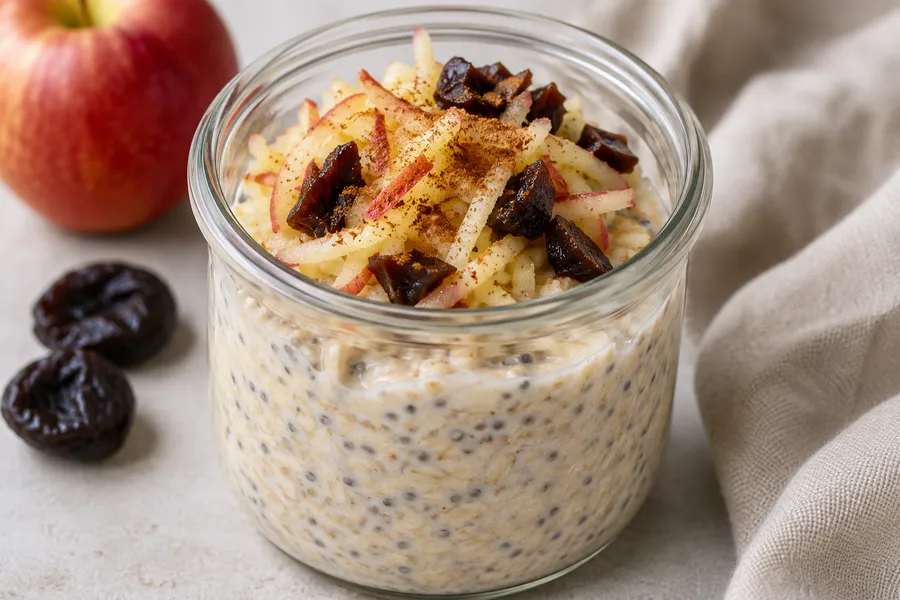
These are the glucose curves of two women in midlife who ate exactly the same meal: overnight oats with chia, grated apple and prunes.
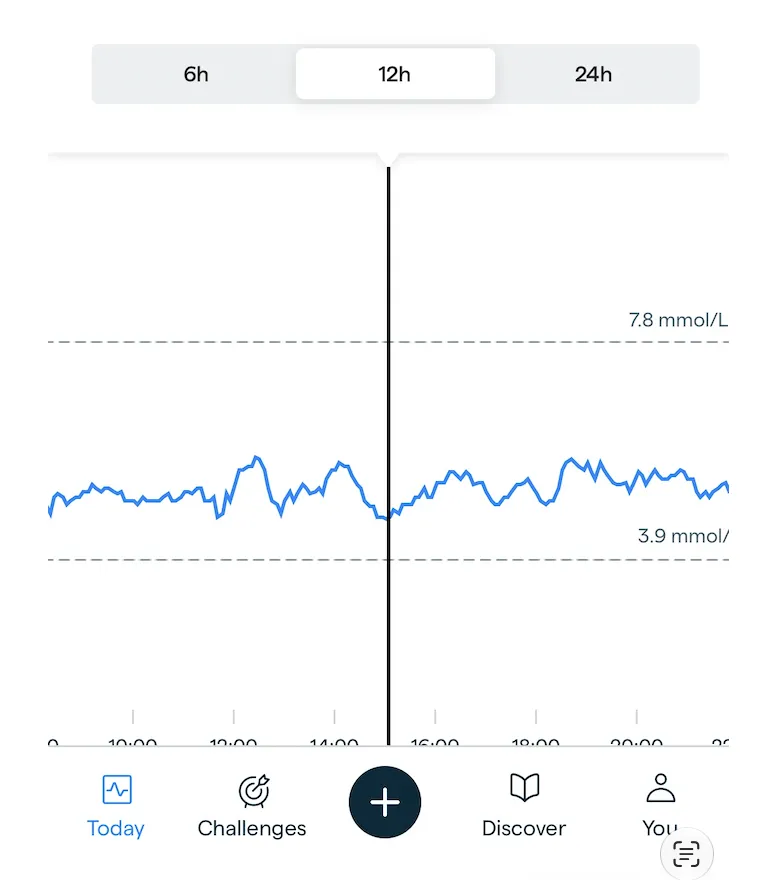
She told me she had plenty of energy through the day.
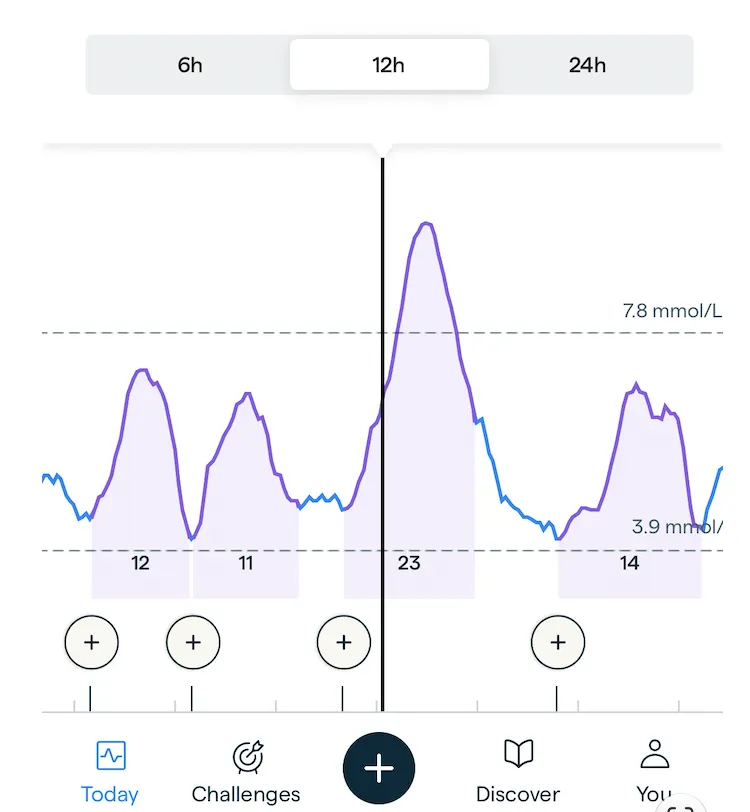
She told me she often felt tired and foggy, and that this pattern repeated after most meals.
Real glucose data from two women, shared with their permission. A rise after eating is normal and healthy. The curves show how glucose moved for each woman. A glucose sensor shows glucose, not insulin. Everyone's results are different.
It's time to discover what works for YOUR body.
Because when it comes to carbohydrates, one size really doesn't fit all.
If you're navigating midlife, you've probably come across plenty of conflicting advice about what you should and shouldn't eat. Eat more protein. Cut the carbs. Eat more carbs. Cut seed oils. Fast longer.
But here's what often gets overlooked: we're not all the same.
Two women can eat exactly the same 'healthy' meal and experience very different responses. Our physiology, hormones, metabolic health and lifestyles all influence how our bodies respond to food. And what worked for you ten years ago might not be what works best for you today.
That's why I believe generic midlife diet advice can be so frustrating. It assumes we're all starting from the same place, when we're not.
If you're fed up with trying everything, watching the scales refuse to budge and wondering why nothing seems to work for you anymore, perhaps it's time to stop following everyone else's rules and start understanding your own body.
This isn't about committing to a low-carb diet for life. It's about discovering how your body responds to different foods, understanding your own patterns and finding a starting point that makes sense for YOU.
The 14-Day Carb Tolerance Challenge is your first step towards making more informed choices, feeling more confident around food and finally finding a way forward that feels right for you.
What you'll be able to say after 14 days
"I finally understand why blood glucose matters."
You'll discover how blood glucose works, why it matters for your metabolic health, and how it can influence your energy, hunger and weight management — particularly as your body changes through perimenopause and menopause.
"I know how my body handles the carbs I love."
Bread, oats, potatoes, fruit — you might be surprised by what you discover. You'll see your own glucose responses to everyday foods and how the same meal can affect different women differently. No guesswork, no blanket rules.
"I understand my own patterns."
You'll start connecting the dots between what you eat, your glucose responses, hunger, cravings and energy levels. Instead of following someone else's diet advice, you'll begin to understand what works for your body — and what might be worth changing.
"I know what to do next."
You'll finish with more than a collection of glucose readings. You'll have practical insights, a clearer understanding of your body and a starting point for making food choices that support your health, your weight-management goals and how you feel in midlife.

A sensor that teaches you for 14 days, then comes off.
For 14 days you wear a small glucose sensor on the back of your arm. A rise after a meal is normal and healthy, so we look for patterns over several days and pay little attention to any single reading. Alongside your hunger and energy, those patterns become one piece of the picture.
- A short daily lesson shows you exactly what to look for and how to make sense of it.
- There are no "good" or "bad" foods, and no red or green ratings.
- High-glucose alerts are switched off, so you aren't interrupted by every rise.
- When the 14 days are over, the sensor comes off and you keep what you've learned.
Everything inside the Challenge
The 14-day course
Short daily lessons that walk you through what to look for and how to understand it, written and checked against the research by me.
The app
Your lessons, food lists and recipes in one place, with a daily check-in for hunger and how you feel so you can see them alongside your glucose.
Me, in your pocket
An in-app chat with me throughout the Challenge. Ask a question there and I answer it myself.
Your next step
At the end of the 14 days you'll have a clear path forward built on your own results.
You’ll need to purchase a continuous glucose monitor (CGM) separately to take part in the challenge. If you live in the UK, we’ll provide you with a discount code so you can get yours for £35 to £45 depending on the brand you choose.
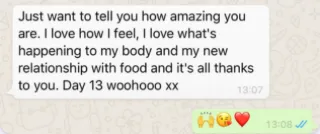
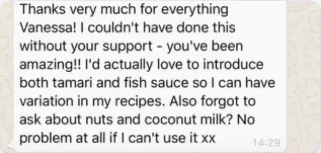
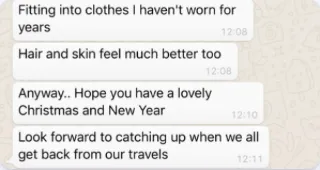
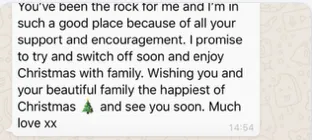
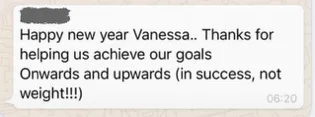
Real women, in their own words.
A few of the messages I've received from women I've supported over the years.


The truth is, staying stuck has a cost.
Years of plans and supplements that did not last add up, and so do the evenings when you are too tired to do the things you want to do. You may have noticed you no longer feel quite like yourself. I have kept the Challenge as affordable as I can, so that finding out where to start does not need another big spend.
So you can start to feel like yourself again.
For one payment of £17 here's what you get.
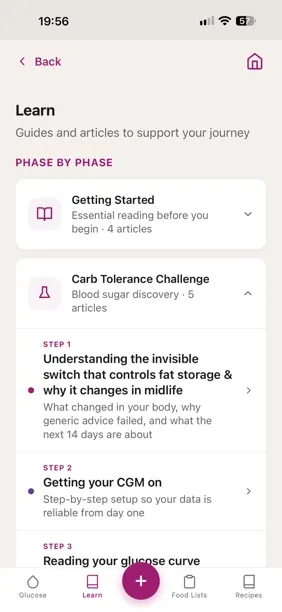
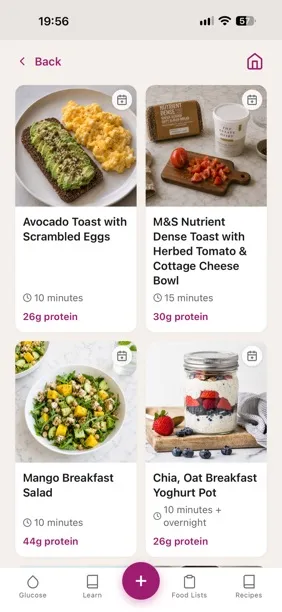
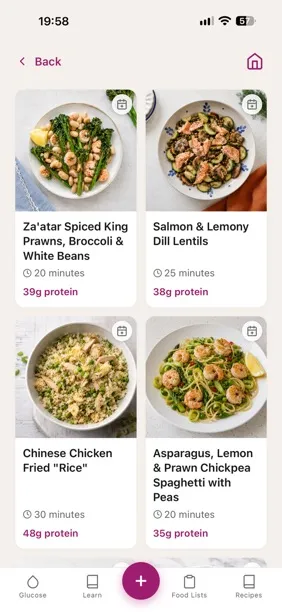
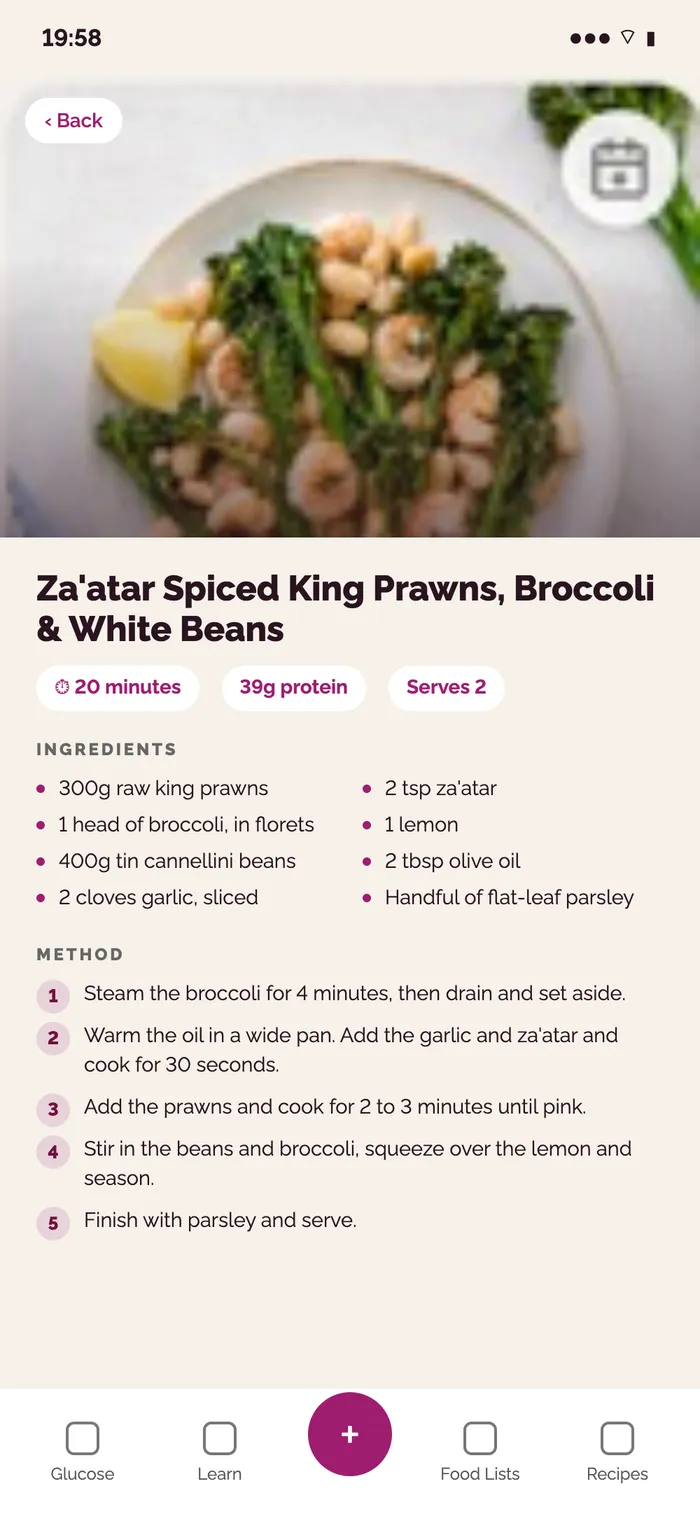
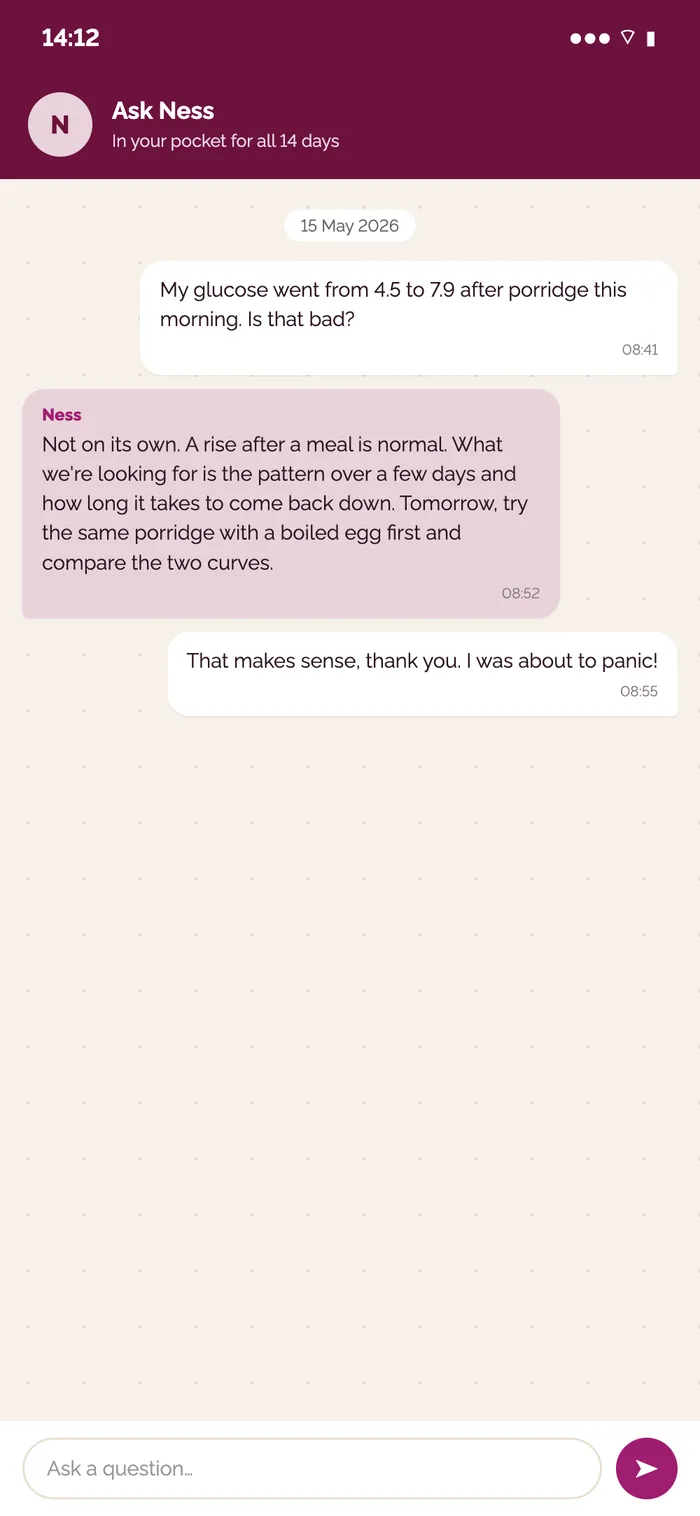
Instant access to the app, everything you need for the 14 days, and me whenever you have a question.
Whenever you have a question, you can ask it inside the app and I answer it myself. If a reading puzzles you or a meal leaves you unsure, you have somewhere to take it.
Each day shows you exactly what to look for on your sensor and what it means, in plain English.
Quick breakfasts, simple suppers and lunches you can make the night before, with the protein worked out for you.
One tap for hunger and one for how you feel, so you can see them alongside your glucose.
At the end of the 14 days you'll know what your results mean and what to do with them.
You’ll need to purchase a continuous glucose monitor (CGM) separately to take part in the challenge. If you live in the UK, we’ll provide you with a discount code so you can get yours for £35 to £45 depending on the brand you choose.
Doors open in January 2027.
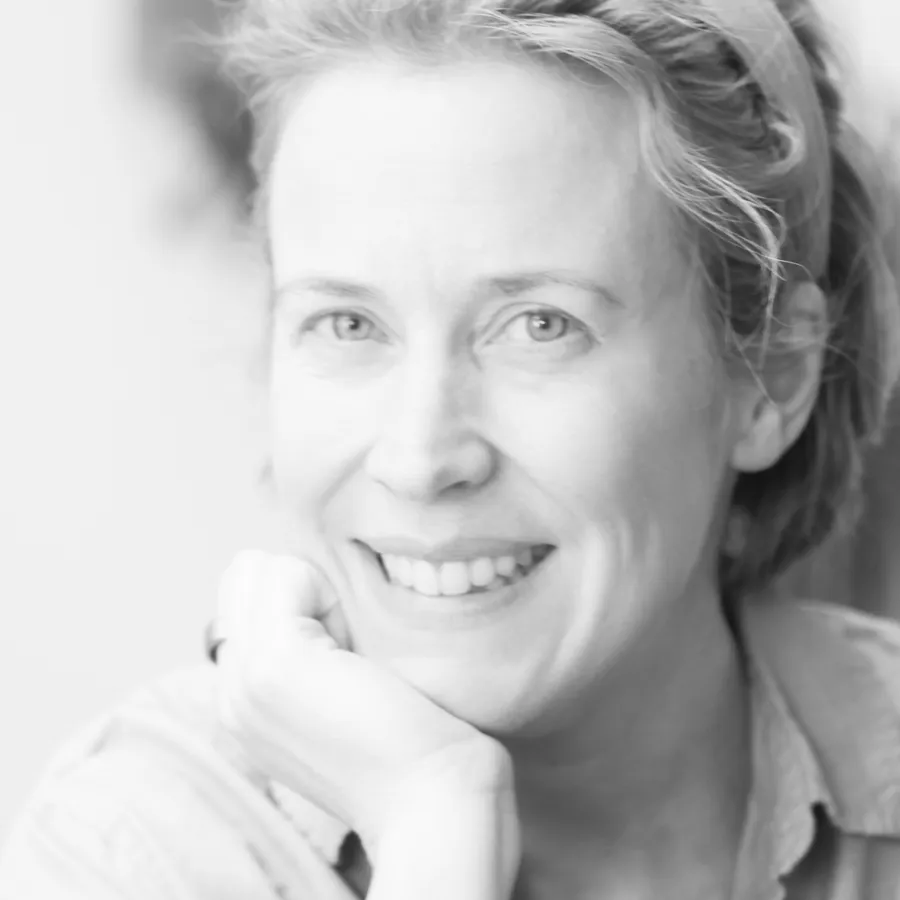
Hi, I'm Ness.
I'm a registered nutritional therapist, a former lawyer and a woman navigating midlife myself. So I understand how frustrating it can be when the things you've always done to manage your weight and feel healthy suddenly don't seem to work anymore.
Before retraining in nutrition, I spent 16 years as a lawyer. That background taught me to question assumptions, look closely at the evidence and never accept something simply because everyone else says it's true.
It's an approach I bring to nutrition, too. I'm a member of BANT, registered with the CNHC, and passionate about helping women make sense of the science rather than getting lost in conflicting dietary advice.
I started wearing a continuous glucose monitor myself, and the results surprised me. My body responded very differently to some of the foods I had always thought of as healthy choices.
Not long afterwards, a blood test showed that my fasting insulin was elevated, even though my routine blood results had always seemed fine. A glucose monitor can't measure insulin, so this was a separate piece of the picture, and it made me look much more closely at the evidence on insulin and metabolic health in midlife.
Once I started making changes to the way I ate, my weight came down and I felt more like myself in perimenopause than I had in years. That was my experience. Every woman's body is different, which is exactly why I want to help you find out what works for yours.
That's why I created the Carb Tolerance Challenge.
We need to understand what's happening in our bodies, why our responses to food can differ, and how to use that knowledge to make choices that work for us.
And that's exactly what I'm going to help you start discovering over these 14 days.
Is the Challenge right for you?
It's for you if
- you're in perimenopause or menopause and your body is responding to food differently
- you've tried everything, and you want to understand why you are stuck and can't lose weight
- you've never worn a glucose sensor and want someone to show you what to do, step by step
- you've worn a glucose sensor before and nobody explained what the data meant
- you'd like to learn from your own results instead of following another generic plan
It isn't right for you if
- you have type 1 diabetes
- you're vegetarian or vegan, because the lessons and most of the recipes in the Challenge are built around foods that include animal products
- you have, or have had, an eating disorder such as anorexia or bulimia
- you're having treatment for cancer
- you find tracking numbers distressing
- you're pregnant or breastfeeding
If you have type 2 diabetes or take medication that lowers your glucose, please speak to your GP before you join.
Your questions, answered
What do you mean by carb tolerance?
By carb tolerance, I mean how your blood glucose responds when you eat carbohydrates — how much it rises, how quickly it settles and how those responses can vary depending on what you eat, how much you eat and even what's going on in your day.
But the numbers are only part of the story.
Over the 14 days, we'll start connecting the dots between your glucose patterns and how you're actually feeling. Your energy, hunger, cravings and how satisfied you feel after meals. You might discover that certain foods keep you feeling fuller for longer, while others leave you hungry again surprisingly quickly.
We'll also explore how blood glucose regulation fits into the bigger picture of metabolic health, weight management and metabolic flexibility — your body's ability to switch between using carbohydrates and fats for energy.
The aim isn't to chase perfectly flat glucose readings or label foods as good or bad. It's to start understanding your own physiology, recognise patterns that may be relevant to your weight-loss journey and make more informed choices about what works for you.
A glucose monitor can't diagnose insulin resistance, measure metabolic flexibility or tell us everything about your metabolism. But it can offer a fascinating starting point for understanding how your body responds to food.
Will this make me obsessed with my numbers?
The Challenge is designed to avoid that. You wear the sensor for 14 days and then it comes off. A rise after eating is normal and healthy, so we look at patterns over several days and pay little attention to any single reading. There are no good or bad foods, and we turn the high-glucose alerts off.
Do I need to buy a glucose sensor?
Yes. You’ll need to purchase a continuous glucose monitor (CGM) separately to take part in the challenge. If you live in the UK, we’ll provide you with a discount code so you can get yours for £35 to £45 depending on the brand you choose.
I've worn a sensor before. Is this still for me?
Yes. Many women have watched the curves on their phone without anyone explaining what they meant or what to do next. The daily lessons are there to help you make sense of what you see.
Is this a diet? Will I lose weight?
I can't promise weight loss, and the Challenge is not a weight-loss plan. In the first week you eat as you normally do and learn to recognise your patterns. In the second week you test specific whole-food carbohydrates to see which may suit you. If weight has become harder for you in midlife, understanding how your body responds to food can inform the choices you make afterwards. Whether that affects your weight differs from woman to woman.
If weight is a concern for you, there will be opportunities for us to explore it further together once the Challenge is finished.
Is the Challenge suitable for vegetarians and vegans?
No, it isn't designed for them. The education and most of the recipes in the Challenge are built around women who eat animal products, so I don't want you to pay for something that won't fit the way you eat.
I have type 2 diabetes. Can I join?
Please speak to your GP before you join, particularly if you take medication that lowers your glucose.
What happens after the 14 days?
You'll finish with a clear next step built on your results. If you'd like support to put it into practice, I'll tell you about the Metabolic Switch at the end of the Challenge. It is optional.
Find out how your body responds to carbohydrate.
Join the waitlist and you'll be the first to hear when doors open in January 2027.
Join the waitlistCould your eating patterns be telling you something about your metabolism in midlife?
Find out your midlife eating archetype and what might be happening beneath the surface.
The quiz describes the patterns you notice day to day. It can't diagnose a condition or tell you what is happening inside your body. You'll be asked for your name and email to see your result.




Come and find me on Instagram.
It's where I share news about the Challenge first.